

The generation gap refers to the differences in attitudes, values, and behaviors between individuals of different generations. This gap can cause misunderstandings, disagreements, and tension in many relationships.
Work, friendship, parental, and love relationships can all be affected by the generational differences between people. In this blog, we’ll delve into the impact of the generation gap on various relationships, exploring how these differences can lead to challenges and opportunities for understanding and growth.
What Is a Generation Gap?
A generation gap describes the differences that may develop between people who grew up during different periods of time. Each generation is influenced by the social expectations, major events, family structures, technology, and cultural values of its time.
For example, one generation may place a strong emphasis on tradition and stability, while another may prioritize independence, flexibility, or personal expression. These differences do not automatically create relationship problems, but they may affect how people communicate, resolve conflict, make decisions, and express their needs.
How Does Generational Dating Affect the Relationship?
Generational dating refers to romantic relationships between people from different age groups or life stages. An age difference does not determine whether a relationship will succeed, but it may influence expectations surrounding communication, finances, family, social activities, technology, and long-term goals.
Partners may also have different views about marriage, parenting, gender roles, career priorities, or how much time they spend online. When these expectations are not discussed openly, misunderstandings may develop.
At the same time, generational dating can bring different experiences and perspectives into a relationship. Couples who communicate respectfully and remain curious about each other’s viewpoints may find that their differences strengthen the relationship.
How Can You Know the Generation Gap Is Affecting Your Relationship?
When disagreements repeatedly center on age-related expectations or experiences, it may mean that the generation gap is affecting your relationship.
Possible signs that the generation gap may be affecting the relationship include:
- Frequent misunderstandings about communication
- Different expectations about commitment or family
- Conflict surrounding technology or social media
- Discomfort with each other’s interests
- Different financial habits or career priorities
- Feeling dismissed because of your age
- Difficulty agreeing on future goals
These challenges do not necessarily mean the relationship is unhealthy. They may simply indicate that both partners need more direct communication, empathy, and understanding.
Some differences are normal in relationships with an age gap, but certain behaviors, such as financial pressure, controlling behavior, disrespect, unequal decision-making, or repeatedly dismissing a partner’s feelings because of their age, may be red flags rather than simple generational misunderstandings.
When a partner uses age, experience, income, or authority to control the relationship, the issue may go beyond a generation gap and should be taken seriously.
Understanding Generational Differences
To understand how an age or generation gap affects relationships, it is important to recognize the nature of generational differences. Each generation is shaped by its unique historical, social, economic, and technological context, which can create distinct perspectives and approaches to life.
People from different generations may have contrasting ideas about success, relationships, family responsibilities, personal boundaries, or emotional expression. Recognizing where these viewpoints come from can make it easier to respond with curiosity rather than judgment.
Communication Styles
Generational differences in communication styles can lead to misunderstandings. While older generations may favor face-to-face conversations, younger generations might opt for text messaging and social media interactions. Such variations can create barriers to effective communication.
Discussing how and when each person prefers to communicate can reduce confusion and help everyone feel heard.
Cultural and Social Norms
Norms and values evolve with time, causing differences in cultural perspectives between generations. These disparities can impact relationships, causing conflicts over issues like social norms, lifestyles, and even family traditions.
Cultural background also affects these differences; a common example can be in Japanese culture, where respect and politeness are valued.
The language used in communication will be very important to bridge any generation gap. Instead of assuming that one approach is correct, relationships may benefit from openly discussing the cultural and generational experiences behind each person’s expectations.
Technology and Digital Divide
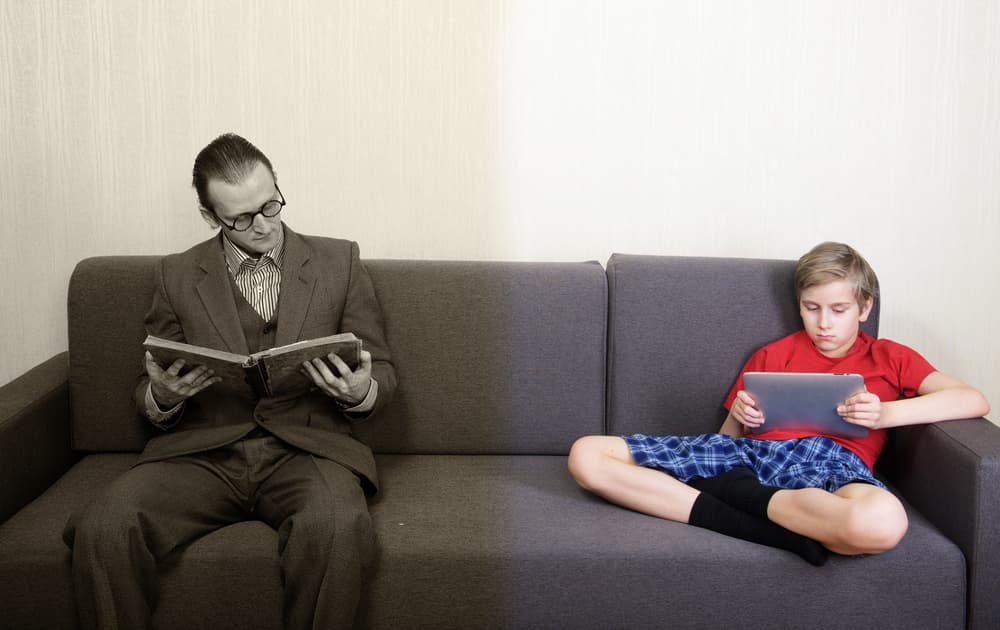
The digital revolution has amplified the generation gap, particularly regarding technology adoption. Tech-savvy younger generations may find it challenging to connect with older generations less comfortable with modern devices and platforms. Also, the younger generation finds it more comfortable to connect with people through virtual mediums, while the older generation is more comfortable with physical connections.
Social media has also played a big part in how we perceive relationships; this might cause conflicts or differences between couples with big age gaps.
In romantic relationships, partners might have different opinions about privacy, posting relationship details, interacting with former partners, or the amount of time spent online. Establishing shared boundaries can help prevent technology from becoming a repeated source of conflict.
Value Systems and Worldviews
Diverse value systems and worldviews can lead to generational conflicts. Political beliefs, attitudes toward work, and even concepts of family and relationships can vary significantly across generations.
These differences can become challenging when people criticize or dismiss each other’s beliefs. Having respectful conversations allows individuals to understand the experiences that shaped each perspective, even when they do not fully agree.
Parent-Child Relationships
The generation gap notably impacts parent-child relationships. Parents may struggle to comprehend their children’s unconventional choices, while children may find it hard to align with their parents’ traditional expectations.
Parents and children can strengthen their relationship by setting clear boundaries, listening without immediately judging, and recognizing that changing social expectations may influence each person’s decisions.

Workplace Dynamics
In the workplace, different generations often have different approaches to work ethics, collaboration, and career goals. Misunderstandings related to these differences can hinder teamwork and productivity. If you are used to working in a more juvenile environment, you may find it difficult to adjust to a more traditional office setting and vice versa.
Teams at work can benefit from acknowledging individual preferences and creating clear expectations that allow employees from different generations to work together effectively.
Intergenerational Friendships and Romantic Relationships
Different approaches to dating and friendship can also cause issues in interpersonal relationships. Differences in values, expectations, and communication styles from different generations can lead to misunderstandings and disagreements. In relationships, you can often see this with couples with large age gaps rather than similar-age couples.
Diverse perspectives can enrich intergenerational friendships and romantic relationships. However, challenges related to differing interests and life stages can also arise. If you feel like these challenges cannot be overcome, maybe you should try couples counseling.
Bridging the Gap
Bridging the generation gap requires empathy, open-mindedness, and active listening. Engaging in meaningful conversations can foster understanding and create a platform for exchanging viewpoints. As a constantly evolving species, we need to be clear that different points of view allow diversity and free speech, making our relationships more educational and eye-opening.
It is important to avoid making assumptions based only on someone’s age. Not everyone from the same generation shares identical values or communication habits.
Generational differences are easier to manage when people focus on understanding each other rather than proving who is right.
How Can We Bridge the Generation Gap in the Relationship?
Couples, families, friends, and coworkers can bridge generational differences by:
- Asking questions instead of making assumptions
- Listening without interrupting
- Discussing communication preferences
- Identifying shared values and goals
- Respecting different life experiences
- Establishing clear boundaries
- Remaining willing to compromise
When disagreements occur, focus on the specific issue rather than using age as criticism. Statements such as “your generation always does this” can make the other person feel dismissed and prevent productive communication.
Learning from Each Generation

Rather than viewing generational differences as obstacles, consider them opportunities to learn and grow. Each generation brings unique wisdom and experiences that can enrich our lives. By actively listening to and learning from each other, we can bridge the generational gap and create meaningful relationships.
Recognizing underlying commonalities despite our differences can nurture strong relationships grounded in mutual understanding and respect. Listening to different perspectives is a key part of any relationship – regardless of age. So, let’s all strive to be open-minded in all our relationships!
Embracing the Diversity of Generations: Our Final Thoughts
Every generation is unique in its way. Whether through fashion trends, music, or technology, each era brings something special. We can learn so much from one another by understanding our generational differences. Through communication and empathy, we can foster relationships across generations that are filled with mutual respect and understanding. Embrace the diversity of generations, and let’s continue to learn from one another!
At Mind and Body Counseling Associates, we understand the power of intergenerational connections. We specialize in relationship counseling to help bridge generational gaps and foster understanding between individuals. Our team of qualified therapists has extensive experience aiding clients with the challenges associated with age differences. Contact us today to get started on your journey!